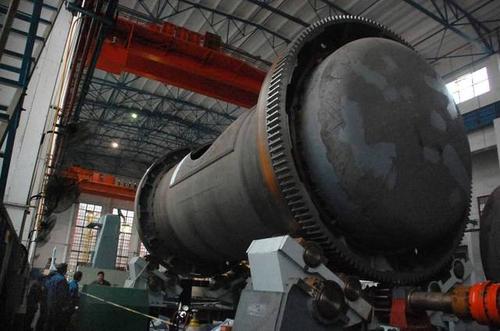
Before discussing the wear mechanisms of the PS converter lining and recommendations for magnesia-chrome brick selection, it is necessary to first understand the basic structure and operating principles of the PS converter.
The PS converter is widely used in matte converting processes due to its simple operation, small footprint, relatively low investment cost, and high production efficiency. Its furnace lining is typically constructed with magnesia-chrome bricks. However, different areas of the converter are subjected to varying degrees of temperature fluctuation, molten bath erosion, chemical attack, and mechanical stress. Therefore, refractory selection for the PS converter lining should not rely solely on a single refractory brick property. Instead, zoned configuration should be carried out according to the actual wear mechanisms of the tuyere zone, mouth zone, slag line zone, furnace shell, and end walls.
Core Conclusions on Refractory Selection for PS Converter Linings
From the perspective of actual wear intensity, the typical order of vulnerability for different areas of the PS converter lining is as follows:
Tuyere zone → Slag line zone → Mouth zone → Furnace shell → End walls
- The tuyere zone experiences the most severe operating conditions and should preferentially use high-grade fused or semi-rebonded magnesia-chrome bricks.
- The slag line zone is exposed to long-term high-temperature slag attack, so resistance to slag corrosion and slag penetration should be emphasized.
- The mouth zone is affected by thermal cycling, charging impact, and slag cleaning abrasion, requiring a balance between thermal shock resistance and mechanical strength.
- For the furnace shell and end wall areas, semi-rebonded or direct-bonded magnesia-chrome bricks may be selected according to the degree of corrosion in order to control overall cost.
Why Are Magnesia-Chrome Refractories Mainly Used in PS Converter Linings?
The PS converter in copper smelting must withstand combined attack from high-temperature molten bath, fayalite slag, SO₂-bearing gas, metal vapor, and cyclic converting operations. Magnesia-chrome refractories offer good high-temperature stability, slag resistance, and corrosion resistance, which is why they are commonly used in PS converter linings.
However, not all areas of the converter use the same grade of magnesia-chrome brick. A more reasonable approach is to select refractory materials in grades according to the wear rate and maintenance cycle of different furnace zones, so that the overall overhaul cycle can be matched as closely as possible with local repair cycles, thereby reducing material waste and operational risks.
Wear Mechanisms of Different Areas in the PS Converter Lining
1. Tuyere and Tuyere Zone: The Most Easily Damaged Critical Area
The tuyere zone is the area with the most severe operating conditions in the PS converter, and its service life is typically only about one-third to one-quarter of the overall furnace campaign life. Extending the service life of the tuyere zone can significantly reduce overall furnace lining erosion, decrease maintenance frequency, and improve converter operating efficiency.
Crude copper has very high fluidity, approximately 20 to 30 times that of slag. During the blowing process, gases continuously shear the melt, forming small bubbles, metal droplets, and metal oxides. This leads to intense gas–solid–liquid emulsification reactions in this zone, resulting in severe high-temperature chemical corrosion.
Continuous rolling and agitation of the melt cause strong mechanical wear. Under the combined action of high-temperature metal and slag flow, the bricks gradually become thinner. Continuous heat exchange between cold air and the high-temperature bath also causes rapid temperature fluctuations, which can easily induce thermal spalling and structural spalling.
In order to prevent melt backflow from blocking the tuyeres, the tuyeres need to be repeatedly rodded during operation, which imposes mechanical stress on the tuyere working face and leads to cracking, corner breakage, and fracture.
2. Furnace Mouth Zone: Combined Thermal Cycling and Mechanical Impact
During the blowing process, the furnace mouth is usually oriented upward, and SO₂-containing flue gas is discharged through the hood. The furnace mouth is only rotated to corresponding positions during charging, slag tapping, crude copper tapping, or sampling operations. The service life of the furnace mouth zone is generally about one-half to one-third of the overall furnace campaign life.
The furnace mouth serves as an important channel for internal and external gas exchange, with large temperature fluctuations and direct contact with slag and metal, making it prone to thermal spalling and structural spalling.
Frequent operations such as charging, pouring crude copper, adding cold materials, tapping copper, and cleaning accretions at the furnace mouth cause mechanical impact and wear. Under the combined effects of slag and crude copper corrosion plus external forces, furnace mouth bricks are prone to melting loss, breakage, and spalling.
3. Slag Line Zone: The Area Most Intensively Eroded by High-Temperature Slag
The slag line zone corresponds to the active area of silicon-iron slag and is one of the higher-temperature regions inside the furnace, with temperatures exceeding 1250°C. High-temperature slag reacts with magnesia-chrome brick, lowering the local melting point and causing furnace lining erosion.
This area is typically the second most vulnerable zone after the tuyere zone. In actual maintenance practice, when tuyere bricks are replaced, slag line bricks often need to be replaced simultaneously.
4. Furnace Shell and End Wall: Consideration of Molten Bath and Gas Phase Zones
The furnace shell and end wall, excluding the slag line, furnace mouth, and tuyere zones, can be further divided into the crude copper molten bath zone and the gas phase zone above the slag line.
The crude copper molten bath zone is mainly affected by crude copper penetration, thermal cycling-induced spalling, and mechanical wear caused by molten bath movement.
The gas phase zone above the slag line is influenced by frequent air exchange and heat accumulation/variation. Temperature fluctuations easily cause spalling; meanwhile, sulfide gases and metal vapors can enter the brick pores, forming a degraded layer that loosens the brick structure and reduces its resistance to gas corrosion.
Zonal Material Selection Recommendations for Magnesia-Chrome Bricks in the PS Converter
Based on the failure mechanisms of each section and practical operating experience, the PS converter furnace lining materials can be configured according to the following approach:
| Furnace Section | Main Deterioration Factors | Recommended Materials | Key Selection Focus |
| Tuyere Zone | High-temperature chemical corrosion, melt erosion, thermal shock, mechanical stress from tuyere rodding | Fused or semi-rebonded magnesia-chrome brick, Cr₂O₃ content approx. 22% or 20% | Priority on resistance to corrosion, erosion, and thermal shock |
| Furnace Mouth Zone | Thermal cycling, charging impact, slag removal wear, slag and crude copper corrosion | Semi-rebonded magnesia-chrome brick, Cr₂O₃ content approx. 20% or 18% | Balance thermal shock resistance, structural stability, and mechanical strength |
| Slag Line Zone | High-temperature silicate-iron slag reaction, melt loss, and penetration corrosion | Fused magnesia-chrome brick, Cr₂O₃ content approx. 22% or 20% | Focus on slag corrosion resistance and penetration resistance |
| Furnace Shell | Crude copper penetration, thermal cycling-induced spalling, and molten bath flow wear | Semi-rebonded or direct-bonded magnesia-chrome brick, Cr₂O₃ content approx. 18% or 16% | Balance between service life and cost |
| Furnace End Wall | Gas-phase corrosion, temperature fluctuations, structural loosening and spalling | Direct-bonded magnesia-chrome brick, Cr₂O₃ content approx. 18% or 16% | Economical configuration based on erosion severity |
Summary of Material Selection Approach
The key to refractory selection for the PS converter lining is not simply to upgrade the grade of refractory bricks for all areas, but to adopt a zoned configuration based on the different failure mechanisms in each region. The tuyere zone and slag line zone should preferentially use high-performance magnesia-chrome brick. The furnace mouth zone should balance thermal shock resistance and mechanical impact resistance. The furnace shell and furnace end walls can focus on controlling material cost while still meeting the required service life.
Through this graded configuration approach, it is possible to achieve a more reasonable balance among PS converter lining material cost, maintenance cycle, and production stability.
JHYRef supplies high-quality magnesia-chrome bricks and customized lining solutions for copper smelting PS converters. Our technical team can evaluate different operating conditions in the tuyere zone, slag line, furnace mouth, and other furnace areas to recommend a suitable refractory configuration. Contact us for professional technical support.