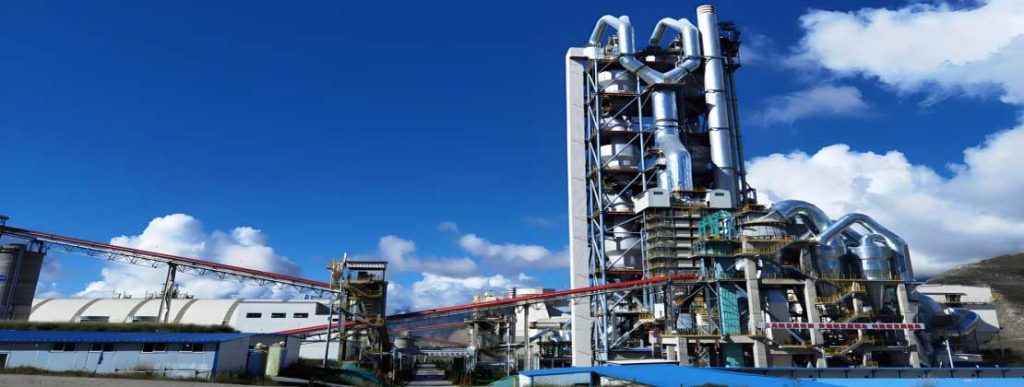
Refractory Solutions for
Cement industry
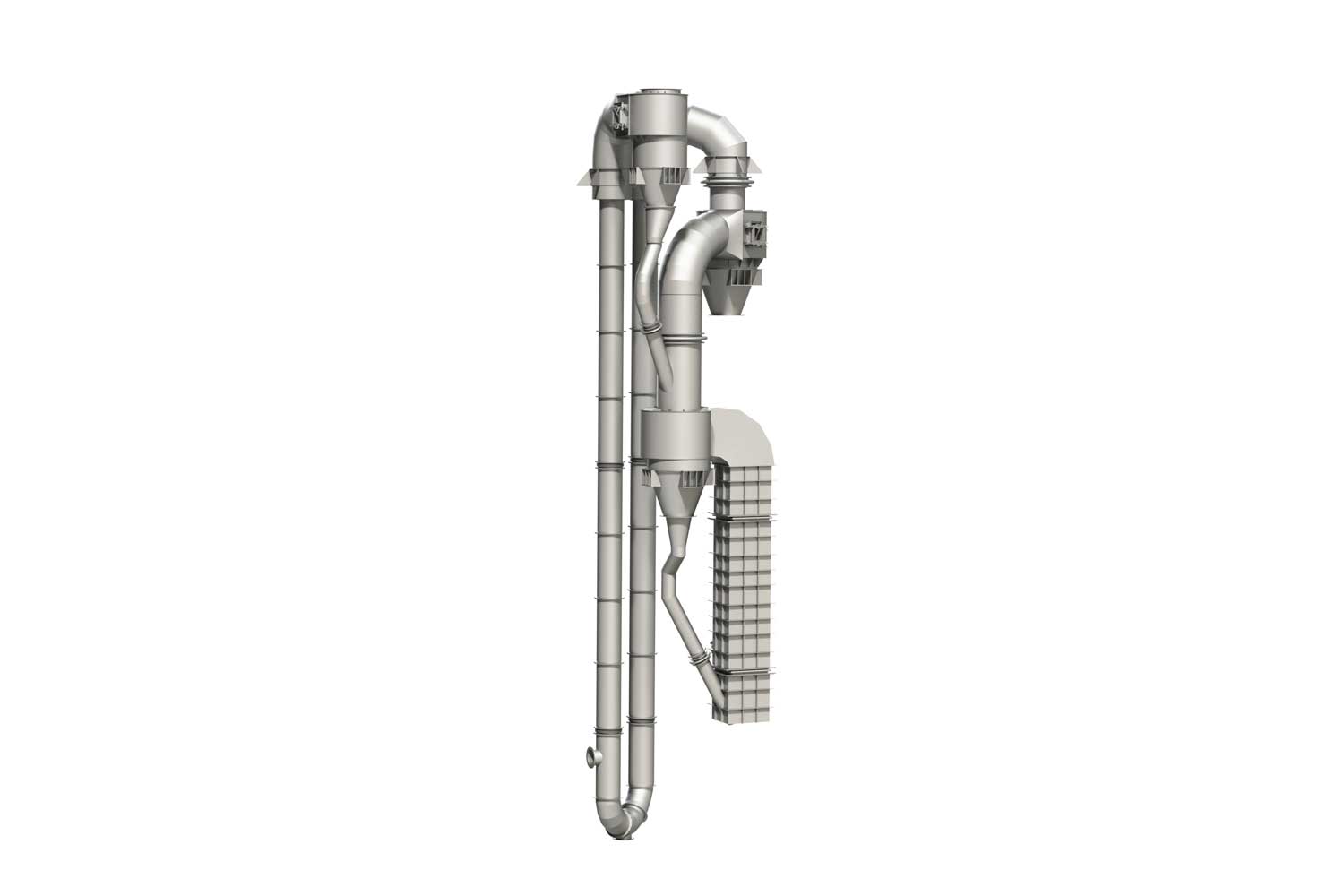
Zhengzhou Jinheyuan Refractories Co., Ltd. (JHYRef) provides integrated refractory solutions for cement kiln systems, covering rotary kilns, preheater systems, calciners, tertiary air ducts, and grate coolers. Based on real kiln operating conditions, we develop refractory lining systems that improve kiln stability, extend campaign life, and reduce total lifecycle cost.
Our cement kiln refractory solutions combine kiln-condition analysis, zone-specific lining design, mechanism-based material selection, shaped refractories, monolithic materials, insulation systems, installation support, shutdown inspection, and long-term optimization throughout the kiln lifecycle.
5
Cement kiln solution areas
28
Years of kiln experience
43
Refractory technology patents
70,000
Tons annual refractory capacity
Cement Kiln Operating Challenges
- High Temperature & Liquid Phase Corrosion: Burning and transition zones are exposed to high thermal load, clinker liquid phase attack, coating fluctuation, and rapid wear when coating becomes unstable.
- Thermal Cycling & Coating Instability: Kiln start-stop cycles, coating collapse, and temperature fluctuation can generate thermal shock, spalling, cracking, and premature lining failure.
- Alkali-Sulfur-Chloride Attack: Alkali circulation, sulfur compounds, and chloride condensation can penetrate refractories, cause chemical degradation, and increase build-up risk in preheater and calciner areas.
- Abrasion Wear & Dust Erosion: Clinker movement, dust-laden airflow, and high-velocity gas streams create continuous abrasion in rotary kiln, tertiary air duct, calciner, and cooler sections.
- Mechanical Stress & Shell Deformation: Kiln rotation, shell ovality, thermal expansion, structural movement, and local stress concentration influence lining stability and service life.
- Heat Loss & Shell Temperature Control: Excessive shell temperature and unbalanced lining thickness increase heat loss, reduce thermal efficiency, and may shorten refractory campaign life.
Cement Kiln Refractory Solutions by Area
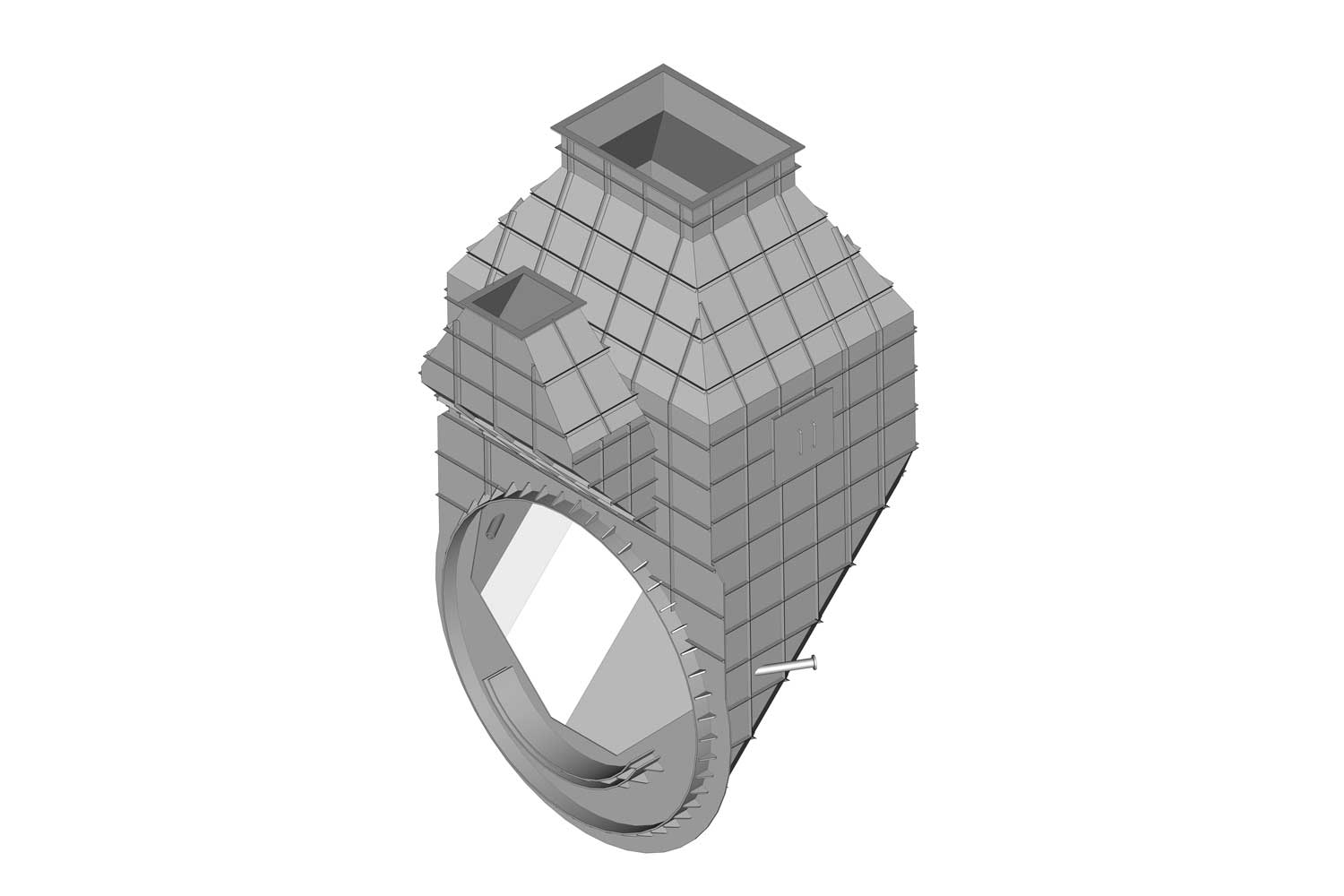
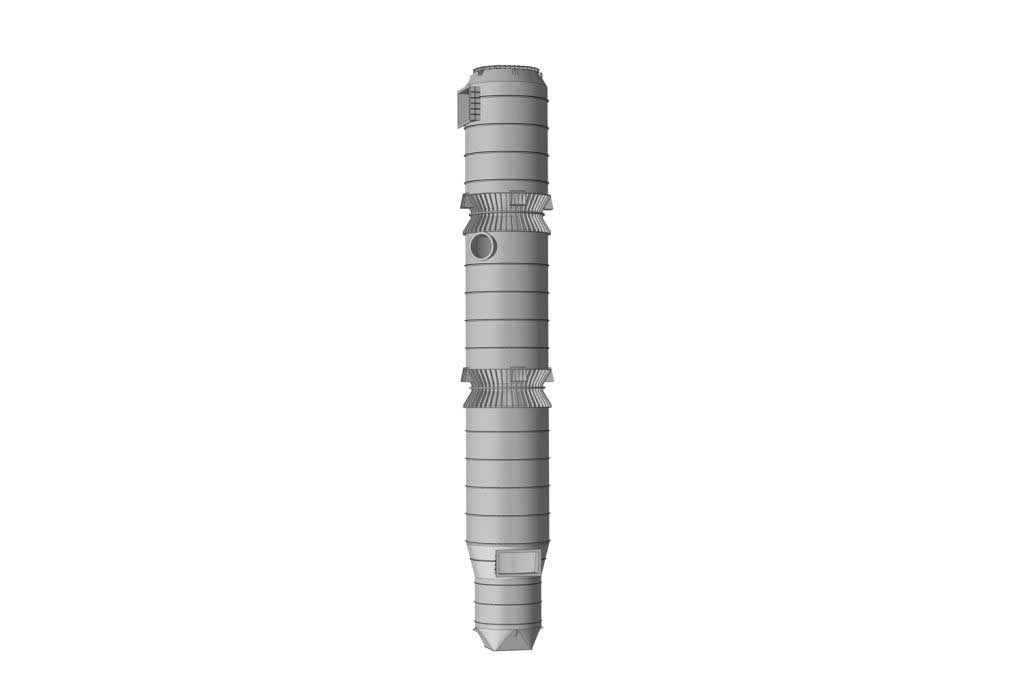
Different cement kiln sections present different thermal profiles, chemical atmospheres, coating behavior, dust erosion conditions, and structural stresses. JHYRef develops five major cement kiln refractory solutions based on actual kiln operation, fuel type, raw meal chemistry, clinker chemistry, shutdown cycle, and maintenance strategy.
Rotary Kiln Lining
Zone-based refractory configuration for burning zone, transition zones, calcination zone, and safety zone, balancing coating stability, thermal shock resistance, corrosion resistance, and mechanical durability.
Preheater
Alkali-resistant and anti build-up refractory systems for upper cyclones, lower stages, inlet areas, cones, and riser ducts exposed to alkali-sulfur-chloride condensation and dust erosion.
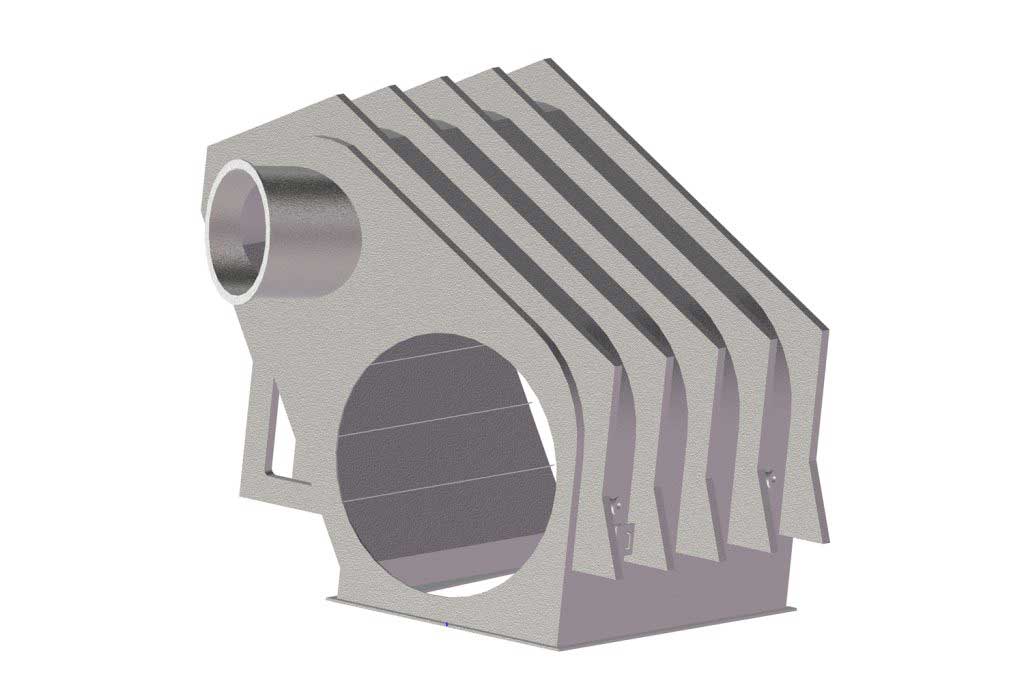
Calciner
Refractory systems for upper calciner, main calciner body, burner and high-temperature zones, and tertiary air inlet areas exposed to fuel combustion, chemical attack, erosion, and local overheating.
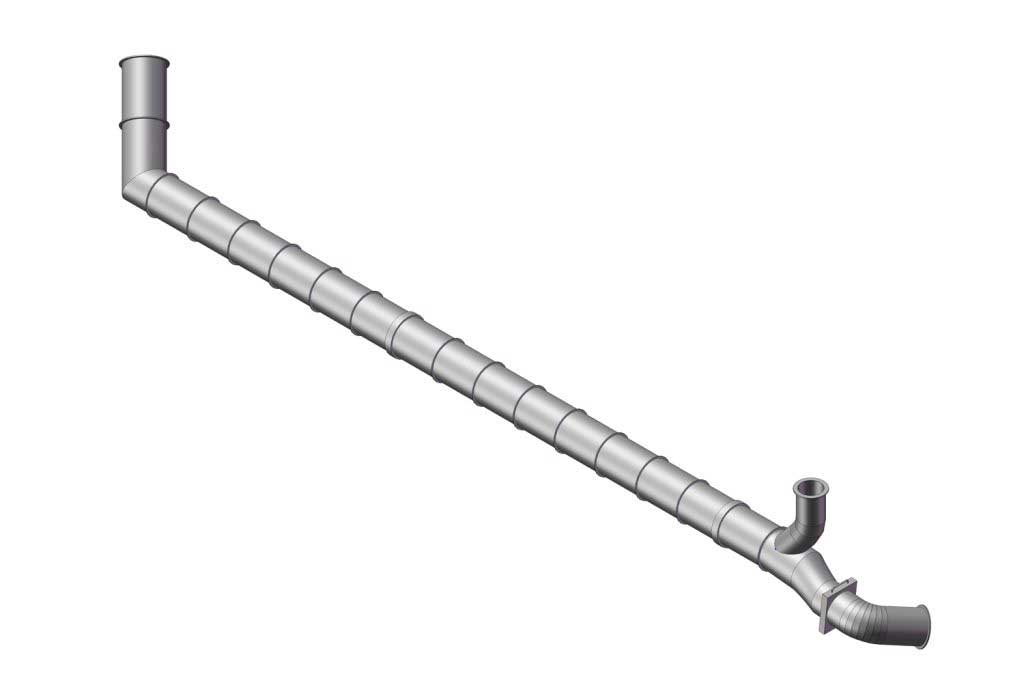
Tertiary Air Duct
Wear-resistant refractory configurations for main air ducts, bends, impact areas, expansion sections, and transition sections under high-velocity airflow, thermal stress, and dust particle impact.
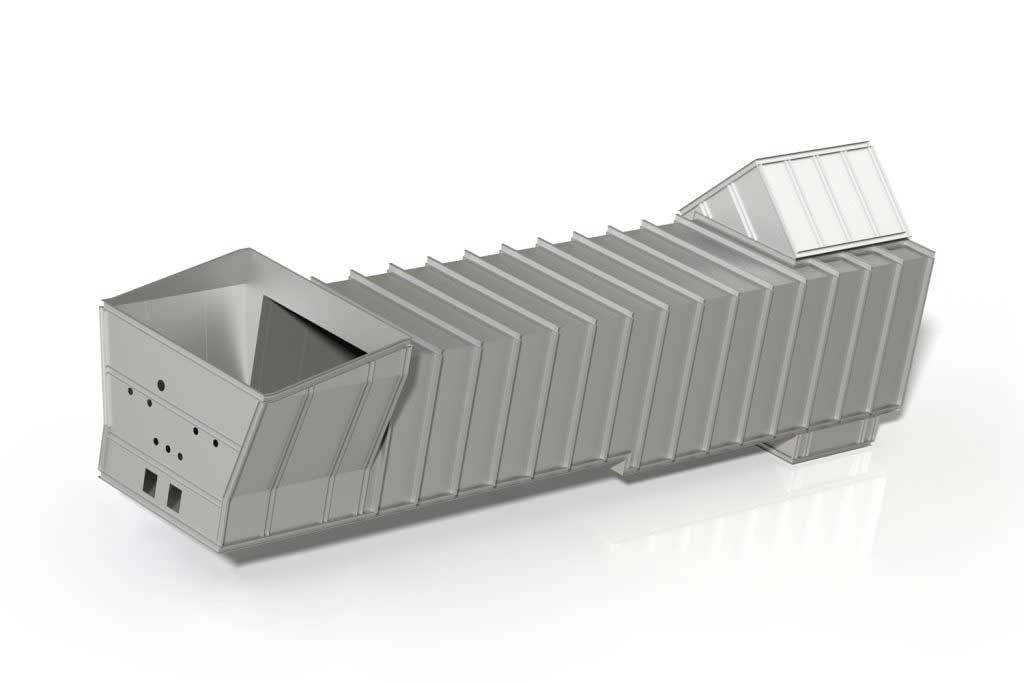
Grate Cooler
Thermal shock-resistant and abrasion-resistant refractory systems for cooler inlet, middle cooler, and discharge area under rapid cooling, clinker impact, mechanical wear, and structural fatigue.
Kiln-Condition-Based Refractory Design Approach
From Operating Conditions to Zone-Specific Lining Configuration
- Analyze cement kiln operating conditions: raw meal chemistry, clinker chemistry, fuel type, temperature profile, coating behavior, alkali-sulfur circulation, shell condition, and shutdown cycle.
- Identify failure mechanisms by zone: liquid phase corrosion, thermal spalling, alkali penetration, dust erosion, abrasion wear, coating collapse, shell ovality stress, and structural fatigue.
- Select refractory systems by function: coating-friendly behavior, thermal shock resistance, alkali resistance, abrasion resistance, corrosion stability, low thermal conductivity, and structural durability.
- Optimize lining structure and lifecycle performance: coordinate working lining, backup lining, insulation configuration, expansion allowance, installation quality, shell temperature control, and maintenance planning.
| Design | Engineering-based refractory zoning according to kiln temperature profile, coating behavior, gas flow, material movement, chemical atmosphere, and mechanical stress. |
| Selection | Mechanism-based material selection focused on thermal shock resistance, alkali resistance, corrosion stability, abrasion resistance, coating compatibility, and structural reliability. |
| Application | Installation guidance, lining structure control, dry-out support, expansion joint recommendations, and shutdown maintenance coordination. |
| Inspection | Shutdown inspection and lining condition evaluation to identify wear patterns, coating instability, cracking, spalling, hot spots, and operationally induced damage. |
| Optimization | Refractory configuration improvement based on operating feedback, shell temperature evaluation, failure analysis, campaign life, and total lifecycle cost considerations. |
Recommended Refractory Systems by Cement Kiln Area
JHYRef provides cement kiln refractory systems for five major application sections: rotary kiln lining, preheater system, calciner system, tertiary air duct, and grate cooler. Final material selection should be optimized according to actual kiln operation, fuel type, raw meal chemistry, coating behavior, temperature profile, and shutdown cycle.
| Application Area | Main Operating Challenge | Recommended Material System | Typical JHYRef Grades |
| Burning Zone | High temperature, clinker liquid phase corrosion, coating formation, and coating fall. | Magnesia-alumina spinel / magnesia-hercynite brick system. | MAGEL85 A, MAGEL88 A, MAGEL85 He, MAGEL88 He |
| Transition Zones | Thermal cycling, unstable coating, alkali-sulfur attack, shell ovality stress, and clinker erosion. | Spalling-resistant magnesia-alumina spinel / high-strength composite system. | MAGEL85 A, MAGEL88 A, ALUS70, ALUS70 Z, MAGROME8 CZ, MAGROME12 CZ |
| Calcination / Safety Zone | Alkali-sulfur deposits, medium-high temperature chemical attack, abrasion, and long-term mechanical wear. | Low thermal conductivity mullite brick / spalling-resistant high alumina / silicon carbide-mullite composite system. | ALUSON M32-23, ALUS65 ScR, ALUS65 Sc1-C3, ALUS70, ALUS40, ALUS35, ALUS30 |
| Preheater System | Alkali-sulfur-chloride condensation, build-up formation, dust-laden airflow erosion, and chemical attack. | Alkali-resistant high alumina / anti build-up refractory system. | ALUS40, ALUS35, ALUS65, ALUS70, ALUS65 ScR, ALUS65 Sc1-C3 |
| Calciner System | Fuel combustion, high-temperature gas-solid reaction, alkali and chlorine attack, erosion, and local overheating. | High alumina / high-strength / thermal shock-resistant / wear-resistant refractory system. | ALUS40, ALUS35, ALUS65, ALUS70, ALUS75, ALUS65 Sc2, ALUS65 Sc3 |
| Tertiary Air Duct | High-velocity airflow erosion, dust impact, thermal stress, and continuous mechanical wear. | Wear-resistant high alumina / high-strength abrasion-resistant refractory system. | ALUS65 Sc3, ALUS65, ALUS65 Sc2 |
| Grate Cooler | Rapid cooling, severe thermal shock, clinker abrasion, impact, and structural fatigue. | Thermal shock-resistant / wear-resistant high alumina refractory system. | ALUS70, ALUS75, ALUS60, ALUS65, ALUS50, ALUS55 |
Thermal Management & Energy Efficiency
In cement kiln operation, refractory lining design influences not only service life, but also heat loss, shell temperature, thermal stability, and energy efficiency. JHYRef combines refractory configuration optimization, insulation engineering, and heat flow control to support stable kiln operation under continuous high-temperature conditions.
- Shell Temperature Control: Optimized thermal management systems can help reduce excessive kiln shell temperature in high-temperature operating zones.
- Heat Loss Reduction: Low thermal conductivity composite brick systems and microporous insulation solutions reduce unnecessary heat transfer and improve thermal efficiency.
- Balanced Lining Structure: Working lining, backup lining, and insulation layers are coordinated to reduce thermal stress concentration and improve lining stability.
- Engineering-Driven Optimization: Thermal analysis, CFD-assisted evaluation, shell temperature evaluation, and heat flow optimization help improve refractory configuration accuracy.
- Lifecycle Value: Thermal management supports lower heat loss, reduced maintenance frequency, extended refractory service life, and improved operational reliability.
Engineering & Technical Services
Reliable cement kiln operation depends not only on refractory materials, but also on operating-condition analysis, lining design, installation quality, thermal management, and long-term operational support. JHYRef provides engineering and technical services covering refractory selection, lining configuration, installation guidance, shutdown inspection, failure analysis, and continuous optimization.
| Kiln Condition Analysis | Evaluation of raw meal chemistry, clinker chemistry, alkali-sulfur cycles, temperature profile, coating behavior, shell condition, and operating cycle. |
| Zone-Specific Lining Design | Refractory configuration development for rotary kiln, preheater system, calciner system, tertiary air duct, and grate cooler. |
| Material Selection Support | Material recommendations based on thermal shock, corrosion, coating stability, abrasion, alkali resistance, structural stress, and insulation requirements. |
| Installation Guidance | Technical support for refractory installation, lining structure control, expansion allowance, dry-out, and shutdown maintenance procedures. |
| Failure Analysis | Analysis of wear patterns, coating behavior, cracking, spalling, chemical attack, hot spots, and operationally induced lining damage. |
| Simulation & Thermal Optimization | Thermal flow analysis, shell temperature evaluation, CFD-based gas flow simulation, and heat transfer optimization for improved lining reliability. |