In the copper smelting process, the PS converter is a key piece of equipment for blowing copper sulfide matte into blister copper. This article provides a detailed introduction to the process flow of the copper PS converter, as well as its structural features.
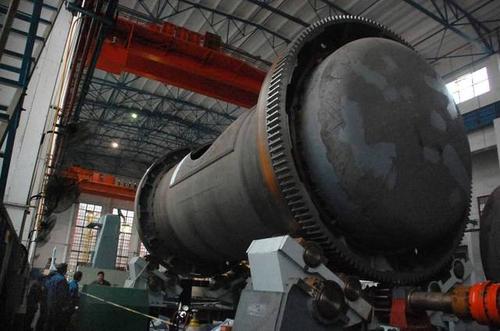
Role of the PS Converter in the Copper Smelting Process
It is an intermediate copper product from smelting copper concentrate, mainly composed of Cu₂O, FeS, FeO, and Fe₃O₄. It also contains small amounts of sulfides such as Pb, Zn, and Bi, along with SiO₂ and enriched precious metals like gold, silver, and platinum. The PS converter acts as an intermediate step in copper smelting, and its main task is to blow copper matte into blister copper with 98–99% copper content.
During blowing, iron in the matte oxidizes and reacts with SiO₂ to form siliceous slag, while sulfur escapes as SO₂. The process has two stages: the slag-making stage and the copper-making stage.
Slag-Making Stage
In the slag-making stage, copper matte at 1100 °C is charged into the furnace. During blowing, iron, sulfur, and other impurities oxidize. The heat from the reaction between SiO₂ and iron offsets thermal losses and raises the furnace temperature to 1250–1300 °C.
Copper-Making Stage
In the copper-making stage, the temperature is kept between 1180–1250 °C. Cold materials are continuously added to prevent overheating and stop copper from accumulating in the slag.
Structure of the PS Converter
It is a horizontal converter, with common capacities and dimensions as follows:
- 150 t per furnace, furnace dimensions: Φ4 × 11.7 m
- 250 t per furnace, furnace dimensions: Φ4.5 × 13 m
Other furnace types:
- 50 t per furnace, furnace dimensions: Φ3.6 × 8.1 m (7.8 m)
- 10 t per furnace, furnace dimensions: Φ2.5 × 4 m
The furnace structure consists of four main parts: the furnace shell, the furnace ends (both sides of the shell), the furnace mouth, and the tuyere openings.
Furnace Shell and Ends
They serve as the container for the copper matte and withstand high temperatures during blowing. They can rotate according to different blowing and lining requirements, ensuring flexibility in operation. These parts are lined internally with high-temperature alkaline refractory materials to separate the molten liquids from the steel shell, guaranteeing a smooth blowing process.
Furnace Mouth
This is the sole access point for charging copper matte, tapping slag, adding cold materials, producing blister copper, discharging gases, and performing lining work.
Tuyere Zone
This area serves as the air inlet channel during the blowing stage, ensuring proper oxidation and slag formation.
Conclusion
Understanding the process flow and structure of the PS converter shows that different lining areas experience varying temperatures, erosion, abrasion, and mechanical stress. Refractory materials must be selected according to these operating conditions.
If you would like to further understand the specific wear mechanisms of the tuyere zone, slag line, furnace mouth, furnace shell, and furnace ends, as well as magnesia-chrome brick selection recommendations for different areas, please continue reading: Wear Mechanisms of PS Converter Linings and Magnesia-Chrome Brick Selection Guide.
As a refractory manufacturer, we consider not only the brick properties but also the converter capacity, blowing practices, slag composition, tuyere layout, and maintenance schedule when selecting materials. This allows us to provide tailored lining solutions for different furnace zones.