
The service conditions for refractory linings in PS copper converters are severe. During converting, the lining must withstand high-speed erosion from high-temperature molten materials and chemical corrosion from fayalite-based slag, while also enduring repeated thermal cycling caused by periodic heating and cooling. During converter-mouth inspection and tuyere maintenance, the lining is also exposed to mechanical impact and abrasion.
The converter mouth, tuyere area, and slag line are the most failure-prone zones. Other lining areas are mainly affected by slag penetration and temperature cycling. Considering these combined operating conditions, magnesia-chrome bricks are preferred for the converter lining because of their excellent resistance to molten bath erosion and fayalite slag corrosion.
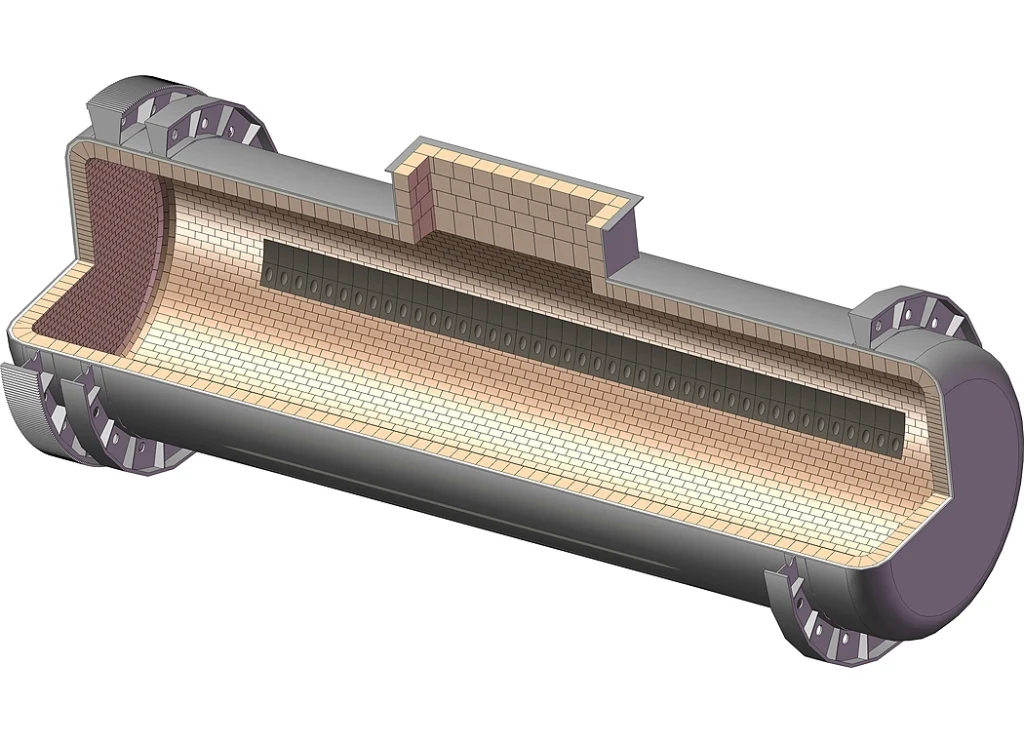
Why Peirce-Smith Converters Need Zone-Specific Refractories
A Peirce-Smith converter is a rotatable, refractory-lined horizontal converter used to convert copper matte into blister copper. During converting, air, oxygen-enriched air, or oxygen is blown through tuyeres into the liquid bath. The process creates severe local wear because slag, matte, gas flow, tuyere action, and temperature fluctuation all work against the lining at the same time.
This makes PS converter refractory selection different from a simple furnace-wall material choice. The tuyere line, slag line, mouth, barrel, end wall, and repair areas each face a different balance of chemical, mechanical, and thermal attack.
If the same grade is used without considering the zone, one area may be under-protected while another area is over-specified. JHYRef’s recommendation process starts by identifying the main wear mechanism first, then matching the refractory material to that working condition.
How to Choose Magnesia-Chrome Brick for PS Converter Linings
The right PS converter refractory system depends on the main wear mechanism in each zone. A tuyere-line problem is different from a mouth repair problem. A slag-line corrosion issue is different from general barrel wear.
Key selection factors include:
– Converter zone: tuyere line, slag line, mouth, barrel, end wall, or repair zone.
– Blowing condition: air, oxygen-enriched air, oxygen level, tuyere arrangement, and punching frequency.
– Matte and slag chemistry: copper matte grade, slag composition, FeO level, and corrosive components.
– Operating temperature: temperature fluctuation and local hot spots affect thermal shock and structural stability.
– Mechanical wear: tuyere punching, cleaning, impact, abrasion, and rotation-related wear.
– Current lining performance: campaign life, thinning pattern, infiltration depth, cracking, spalling, and repair history.
– Shell temperature: hot spots can help identify local lining loss or structural risk.
– Maintenance target: campaign length, shutdown window, and repair method affect material grade and installation choice.
– Quotation goal: full relining, partial replacement, emergency repair, or performance improvement.
The goal is to match material performance to the actual wear pattern. For the tuyere line, high resistance to combined chemical, thermal, and mechanical attack is important. For the mouth area, abrasion, slag splash, and repair practicality may be more important. For repair zones, compatibility with the existing lining can be as important as material strength.
Request a PS Converter Refractory Selection Solution
Whether you are conducting the initial lining selection for a new build project or upgrading an operating converter for better maintenance, simply provide your drawings or operational parameters, and JHYRef will deliver a quantified material configuration assessment for your facility.