As a key type of monolithic refractory material for industrial kilns, the performance of castables directly determines the service life and operational stability of the furnace.
Phosphate-bonded castables and cement-bonded castables are the two main categories. Due to the difference in binder types, they exhibit significant distinctions in bonding mechanisms, physicochemical properties, installation processes, and application scenarios. The following provides a systematic comparison across multiple dimensions to serve as a reference for industrial selection.
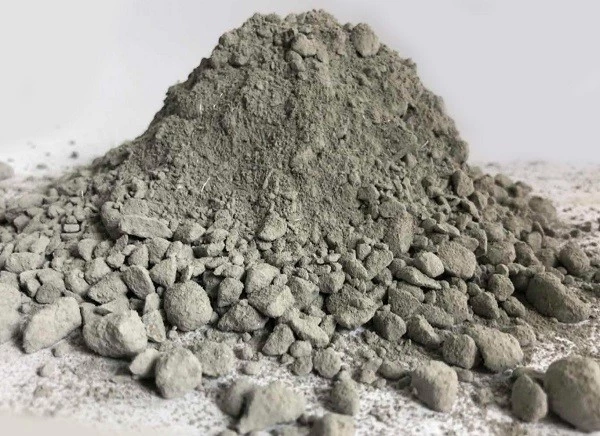
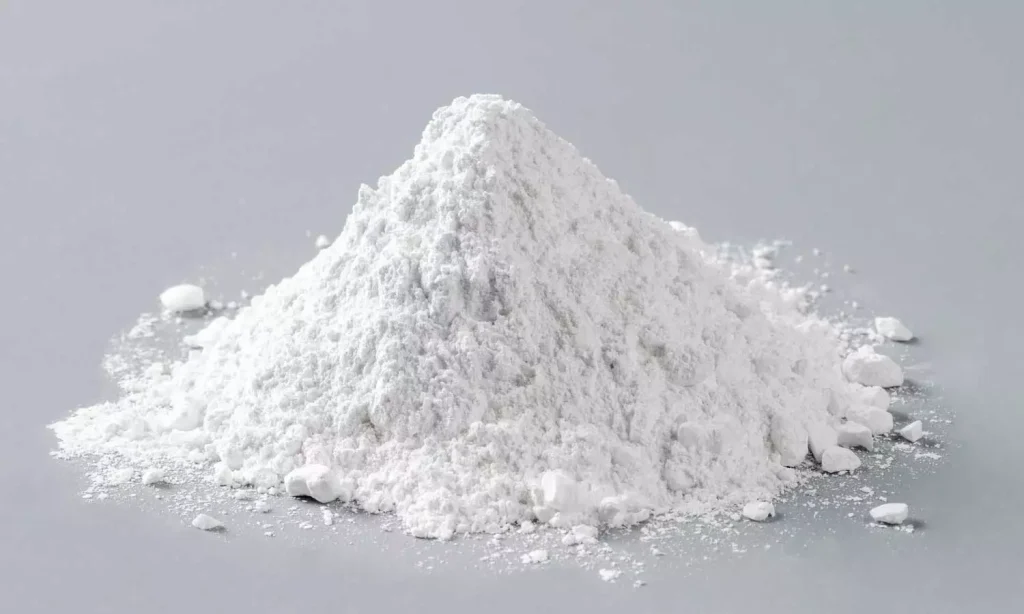
I.Core Differences in Binding Mechanisms Between Phosphate-Bonded and Cement-Bonded Castables
Binding Mechanism of Phosphate-Bonded Castables
Phosphate-bonded castables use phosphoric acid or phosphates (such as aluminum dihydrogen phosphate) as the binder, representing a chemical bonding system. They require curing agents like magnesium oxide or calcium oxide. Through acid–base reactions, these materials form amorphous or crystalline phosphate compounds, which bind the aggregates and powders together and develop strength without high-temperature firing. Ambient temperature has minimal effect on this bonding process. The system exhibits strong adhesion and produces a highly dense structure.
Binding Mechanism of Cement-Bonded Castables
Cement-bonded castables use calcium aluminate cement as the core binder and mainly fall into conventional, low-cement, and ultra-low-cement systems. In low- and ultra-low-cement systems, silica fume or α-Al₂O₃ micro-powder partially replaces the cement, optimizing the structure based on the “micro-powder filling” principle. Their bonding mechanism involves a hydration reaction: calcium aluminate cement reacts with water to produce hydrated products (C₃AH₆, C₂AH₈, AH₃), which rapidly form a network structure at room temperature to provide strength. At high temperatures, after the cement hydrates decompose, aggregate sintering provides secondary strengthening; however, strength dips are likely to occur in the medium temperature range (600–900 °C).
II.Comparison of Key Physicochemical Properties Between Phosphate-Bonded and Cement-Bonded Castables
High-Temperature Performance
In terms of high-temperature resistance, phosphate-bonded castables have a clear advantage. They can withstand temperatures of 1600–1800 °C and still maintain a flexural strength above 18 MPa at 1400 °C, exhibiting strong high-temperature stability with no obvious strength degradation zone. Conventional cement-bonded castables generally offer a refractoriness of 1300–1500 °C. In the medium-temperature range, the decomposition of hydration products causes strength to drop sharply. Low- and ultra-low-cement systems can raise the refractoriness to above 1650 °C, but their high-temperature performance still does not match that of phosphate-bonded systems.
Mechanical Strength
Cement-bonded castables have a clear advantage at room temperature. In conventional systems, 24-hour compressive strength can reach 10–30 MPa, allowing for quick demolding and turnover. Phosphate-bonded castables develop room-temperature strength more slowly and rely on curing agents for control. However, they experience much lower high-temperature strength degradation than cement-bonded systems, making their mechanical performance more stable under high-temperature conditions.
III.Differences in Construction and Curing Processes
The adaptability of construction processes is an important consideration in industrial applications.
Cement-Bonded Castables
Cement-bonded castables are easy to install; simply mix with water to form, without the need for additional binders. Ordinary systems harden quickly, offering strong workability and good flowability. Low/ultra-low cement systems require the use of high-efficiency water-reducing agents to reduce the water amount and lower porosity, but the overall installation process remains relatively simple, and curing conditions are relaxed, allowing hardening at room temperature.
Baking Precautions
It should be noted that cement-bonded castables must follow a proper baking regime after demolding; otherwise, they are prone to cracking or even explosive failure. This is because the various hydration products of calcium aluminate cement have different decomposition temperatures:
- The low-temperature stable hydration phase CAH10 decomposes at around 120℃
- C2AH8 decomposes at 170–195℃ (direct decomposition can only be observed after rapid heating following low-temperature curing)
- After baking at 110℃, the main hydration phases are C3AH6 and AH3, which decompose into C12A7 and AlO(OH) in the range of 250–300℃
Early Strength Development
The early strength of the castable is mainly provided by the hydration products of calcium aluminate cement. Between 120–300℃, these hydration products gradually decompose, causing the collapse of their structure and a significant drop in castable strength. Therefore, the castable exhibits lower strength in this temperature range.
Hydration Reaction and Internal Structure
The hydration reaction of calcium aluminate cement is a dissolution–precipitation process. The cement first dissolves in water and then recrystallizes in available spaces within the castable to form hydration products. These hydration products block the capillary pores inside the castable, creating a relatively large number of closed internal spaces.
Effect of Steam During Baking
During the baking process, the free water and bound water in the castable gradually turn into steam as the temperature rises. The higher the temperature, the higher the saturation vapor pressure of the steam:
- 120℃: 0.1 MPa
- 200℃: 1.5 MPa
- 264℃: 5 MPa
- 300℃: 8.7 MPa
- 345.7℃: 14 MPa
Although the flexural strength of the castable can reach 6 MPa or higher after baking at 110℃, the water turning into steam occurs in the castable’s closed internal spaces, causing a huge volume change. According to PV=nRT, at 200℃, the volume of steam is 2,157 times that of the same mass of water. As the water inside the castable rapidly expands into steam, combined with the decomposition of hydration products and the collapse of their structure, the internal vapor pressure of only 1–2 MPa can cause the castable to crack. Therefore, long-duration holding is usually required at 110℃ and 240–250℃.
Phosphate-Bonded Castables
Phosphate-bonded castables also have strict installation requirements:
- Operators must precisely control water addition
- Some systems must include a setting agent to control the setting time (adjustable range 5–90 minutes); otherwise, the castable may harden too slowly or too quickly
- The binder exists mostly in liquid form, making storage and transportation inconvenient. Powdered phosphate binders can alleviate this issue, but they increase the overall cost
- During curing, excessive water loss must be avoided, otherwise it will affect the structural density. The overall installation cycle is longer than that of cement-bonded systems. In addition, phosphate-bonded castables may experience volumetric expansion after curing, which requires careful consideration for certain kiln applications.
IV.Differentiation in Application Scenarios and Economic Performance
Application Scenarios of Phosphate-Bonded and Cement-Bonded Castables
Phosphate-bonded castables, due to their wear-resistant properties, are widely used in heavily worn areas such as cement kiln cyclones, feed pipes, and boilers. Cement-bonded castables have a broader range of applications, including tertiary air ducts and grate coolers in cement kilns, lime preheaters, and ladles.
Economic Performance
Cement-bonded castables have a significant cost advantage. Conventional systems use readily available raw materials and have low installation costs. Low- and ultra-low-cement systems incur higher costs due to the addition of micro-powders and high-performance admixtures, but they are still less expensive than phosphate-bonded castables. Phosphate-bonded castables, with higher binder prices and more complex installation processes, have a total cost that is 10–15% higher than that of cement-bonded castables.
V.Conclusion
The fundamental difference between phosphate-bonded and cement-bonded castables lies in their bonding systems. The former relies on chemical bonding. It emphasizes high-temperature stability and wear resistance. However, it requires attention to setting time and volumetric expansion in some kilns. The latter depends on hydration bonding. It offers superior room-temperature properties, easy installation, and low cost. This makes it suitable for a wider range of kilns. Industrial selection should consider several factors. These include operating temperature, corrosion intensity, mechanical load, and economic requirements. In general, cement-bonded castables serve as the default choice. Phosphate-bonded or cement-free castables find application in special circumstances.