Premature replacement of refractory materials in cement rotary kilns leads to unnecessary capital waste, while delayed replacement can cause kiln shell damage and forced shutdowns, resulting in significant losses.
How can we accurately determine when refractory materials have reached the point where replacement is necessary?
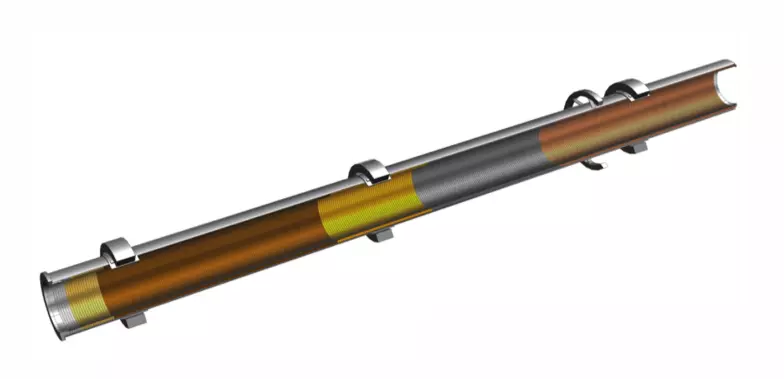
Service Life of Refractory Materials in Different Parts of a Cement Rotary Kiln
The service life of refractory materials varies in different parts of a cement rotary kiln:
·In general, the burning zone has the shortest service life, typically around one year.
·The upper and lower transition zones usually have a service life of about two years.
·The preheating zone has a service life of approximately three to four years.
·The kiln outlet castables generally have a service life of about five to twelve months.
Signals That Refractory Materials Need Replacement
The signals for replacing refractory materials essentially reflect the degree of lining deterioration. They can be divided into planned shutdowns, carried out in advance, and emergency shutdowns, triggered when the kiln’s safety is at risk. Clearly distinguishing between these two types of signals helps avoid losses from unplanned downtime while preventing serious incidents such as kiln shell burn-through or glowing kilns. Using an infrared thermometer to measure the temperature of the kiln shell is a key method for assessing the condition of the lining, with specific warning values defined for different kiln zones.
Burning Zone: If the kiln shell surface temperature remains ≥380°C at any single point, or the average temperature is ≥350°C, or a local measurement point rises ≥50°C in a single reading, it indicates that the kiln lining has spalled, the refractory bricks have thinned, and the insulation performance has deteriorated.
Transition / Preheating Zones: If the kiln shell surface temperature remains ≥330°C, it indicates brick wear or cracking, causing heat penetration.
Kiln Outlet: If the temperature in the castable area remains ≥300°C, it indicates castable spalling or exposure of the reinforcement, resulting in insulation failure.
| Zone | Planned Shutdown | Immediate Shutdown |
| Burning Zone | 1.Kiln shell temperature ≥380°C 2.Remaining brick thickness ≤80 mm 3.Local kiln skin spalling >¼ of area | 1.Red-hot kiln shell, temperature ≥450°C 2.Entire brick ring loosened or spalled 3.Bricks worn through, heat penetration causing material leakage |
| Transition Zone | 1. Kiln shell temperature ≥330°C 2. Remaining brick thickness ≤70 mm 3. Brick groove wear ≥20 mm | 1.Cracks through the entire brick ring, width ≥5 mm 2.Multiple consecutive bricks spalled, forming gaps 3.Heat penetration causing kiln shell temperature ≥420°C |
| Preheating Zone | 1.Kiln shell temperature ≥300°C 2.Remaining brick thickness ≤60 mm 3.Brick pulverization, hollow sound when tapped | 1.Entire brick ring softened and spalled 2.Large-area castable spalling exposing reinforcement 3.Cleaning of scale causes entire brick ring loosened |
| Kiln Outlet | 1. Remaining castable thickness ≤100 mm 2. Gap between steel shell and castable ≥10 mm 3. Local spalling area <1 m² | 1.Steel protection burned, deformed, or detached 2.Entire castable surface spalled, heat penetration causing material leakage 3.Kiln outlet temperature ≥400°C |
The Core Criteria for Determining Replacement
Manual measurement of the remaining brick thickness is the core criterion for quantifying the need for replacement. When the remaining thickness of refractory bricks in different kiln zones reaches a certain value, the kiln must be shut down to replace the refractory materials.
1. Local Lining Damage or Cracks
Local defects observed during shutdown inspections that have not spread around the entire kiln circumference fall under the warning category and can be repaired locally. If the defects continue to expand, they escalate to an emergency signal:
Refractory Bricks: A single brick with more than one-third of a corner chipped or edge damaged, a groove wear depth ≥20 mm, circumferential cracks longer than 500 mm, or radial cracks ≥2 mm in width.
Castables: Local spalling area less than 1 m², surface cracks with a width <3 mm, or anchor pin damage ≤10%.
Kiln Skin: In the burning zone, if the local kiln skin spalling exceeds one-fourth of the area and cannot be repaired within 7 days after adjusting kiln conditions, the exposed brick surface is subjected to direct high-temperature material erosion.
2. Severe Lining Failure / High-Risk Kiln Signals
These signals indicate a critical risk to the kiln. Continuing operation may lead to glowing kilns, kiln shell burn-through, or the complete spalling of refractory brick rings. The signs are as follows:
The kiln shell exterior shows obvious red-hot areas (dark red or bright red), with temperature measurements indicating ≥450°C. This indicates that the refractory bricks in that area have worn through or spalled, allowing high temperatures to conduct directly to the kiln steel shell. The steel shell will rapidly soften and deform under such high temperatures. If operation continues, burn-through and material leakage explosions may occur within 1–2 hours.
The operating conditions and wear patterns of refractory materials differ across various kiln zones. Therefore, replacement indicators should be evaluated separately for each zone. These can be compiled into a practical table for on-site reference and direct comparison:
| Zone | Original Brick Thickness | Remaining Brick Thickness | Remaining Castable Thickness |
| Burning Zone | 200/230 mm | ≤80 mm (≤35% remaining) | Spalling ≥50%, exposed reinforcement length >200 mm |
| Transition Zone | 180/200 mm | ≤70 mm (≤40% remaining) | Surface cracks ≥5 mm wide, spalling area >0.5 m² |
| Preheating Zone | 150/180 mm | ≤60 mm (≤40% remaining) | Pulverization or softening area >1 m²; hollow sound when tapped |
| Kiln Outlet Castables | 200–300 mm | Thickness ≤100 mm, or gap between steel shell and castable >10 mm | — |
Conclusion
To ensure normal kiln operation, prevent unplanned shutdowns, and optimize operating costs, it is essential to accurately monitor and replace refractory materials in a timely manner. If you have any questions, please feel free to contact JHYRef—we are always ready to provide you with support.
Related Articles:
Why Does Cement Rotary Kiln Refractory Lining Fail Prematurely? ——Click to Learn More