Fireclay bricks can last from a few months to more than 10 years, depending on where they are used. In stable, low-stress applications such as fireplaces, pizza ovens, backup linings, and small forging furnaces, fireclay bricks may last 5 to 10 years or longer. In industrial furnaces, kilns, boilers, and glass regenerators, the typical fireclay bricks lifespan is usually shorter because the lining is exposed to higher temperature, chemical attack, thermal cycling, abrasion, and mechanical load.
The most important point is this: fireclay bricks do not fail simply because they become old. They fail because operating conditions slowly damage the brick structure. Temperature, slag chemistry, start-stop cycles, brick grade, installation quality, and routine maintenance all decide how long the refractory lining can stay in service.
This guide explains typical fire clay brick service life by application, the main reasons fireclay bricks fail early, and how to extend refractory brick lifespan through correct material selection and maintenance.
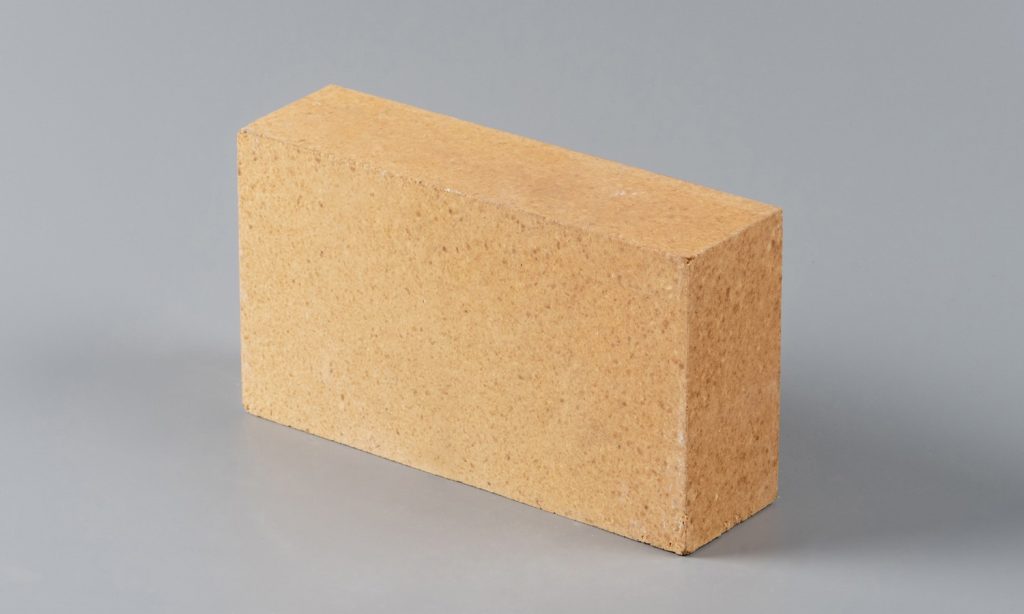
Quick Answer: Typical Fireclay Brick Lifespan
| Application | Typical service life | Main damage risk | Selection note |
|---|---|---|---|
| Fireplace, pizza oven, home use | 5-10+ years | Mechanical impact, moisture, repeated heating | Standard or insulating fireclay bricks may be enough |
| Small forging furnace or light-duty kiln | 3-5 years | Thermal shock and surface wear | Choose thermal-shock-resistant fireclay bricks if cycling is frequent |
| Industrial boiler or heater | 3-5 years | Ash attack, temperature cycling, joint damage | Dense fireclay bricks or higher-grade bricks are often preferred |
| Hot blast stove or heating stove | 2-4 years | Thermal cycling and creep under load | Low-creep or dense fireclay bricks may improve campaign life |
| Glass furnace regenerator | 1.5-3 years | Alkali vapor and chemical corrosion | Dense or low-porosity grades are important |
| Cement rotary kiln, non-critical zones | 6-12 months | Alkali, clinker dust, abrasion, thermal load | Fireclay bricks are suitable only in lower-stress zones |
| Severe slag or rapid thermal shock zones | Less than 6 months possible | Corrosion, spalling, cracking | High alumina, mullite, or other refractories may be better |
These ranges are reference values, not guarantees. A well-selected brick installed correctly can exceed the average. A misapplied brick in an aggressive zone can fail much sooner than expected.
Why Fireclay Brick Service Life Varies So Much?
Fireclay bricks are alumino-silicate refractory bricks made mainly from fireclay and fired clinker. They are widely used because they are economical, stable in moderate high-temperature environments, and easier to apply than many specialty refractories.
However, fireclay bricks have limits. In many industrial systems, they are exposed to several damage mechanisms at the same time:
– High operating temperature softens low-melting phases inside the brick.
– Rapid heating and cooling create microcracks.
– Slag, alkali vapor, ash, or molten material penetrates open pores.
– Mechanical abrasion removes the hot face layer by layer.
– Poor installation creates weak joints and uneven stress.
That is why two furnaces using the same fireclay brick can show very different service life. A stable boiler lining may run for several years, while a cement kiln zone with alkali attack and abrasion may need repair within months.
Five Factors That Determine How Long Fireclay Bricks Last
1. Operating Temperature and Heat Load
Operating temperature is one of the strongest factors affecting fireclay bricks lifespan. Fireclay bricks are commonly used in medium-temperature refractory applications, but their exact limit depends on alumina content, porosity, refractoriness under load, and working atmosphere.
A brick may have a high refractoriness rating, but that does not mean it should operate continuously at the maximum listed temperature. Continuous exposure near the upper limit can cause softening, deformation, glassy phase formation, and strength loss.
As a practical rule, keep the continuous working temperature below the brick’s safe operating range, not just below its laboratory refractoriness value. If the furnace runs close to the material limit for long periods, consider a higher-grade fireclay brick, a low-creep clay brick, or a high alumina brick.
2. Thermal Shock and Start-Stop Cycles
Thermal shock happens when the brick surface heats or cools faster than the interior. The temperature difference creates stress inside the brick. Repeated stress leads to microcracks, and those microcracks eventually become visible cracking, spalling, or corner loss.
Thermal shock is common in:
– Batch kilns
– Small forging furnaces
– Intermittent heating furnaces
– Hot blast stoves
– Furnace doors and openings
– Zones exposed to cold air leakage
If the furnace has frequent shutdowns, rapid heating, or forced cooling, choose thermal-shock-resistant fireclay bricks and follow a controlled dry-out and heat-up curve.
3. Slag, Alkali, Gas, and Chemical Corrosion
Chemical attack can shorten fire clay brick service life even when the temperature is within the normal range. Fireclay bricks are silica-rich acidic refractories, so they are more vulnerable in alkaline or flux-rich environments.
Common chemical risks include:
– Alkali vapor from cement raw meal or fuel ash
– Slag penetration in steel, non-ferrous, and waste treatment systems
– Sulfur, fluorine, and other corrosive gases
– Molten metals or glass contact
– Clinker dust and high-velocity ash erosion
Once slag or alkali penetrates open pores, it can react with the brick matrix and form low-melting compounds. The surface then becomes weaker, more porous, and easier to erode. In aggressive cement, glass, and metallurgical zones, this is often the main reason for early refractory brick replacement.
4. Brick Quality, Grade, and Porosity
Not all fireclay bricks have the same service life. Brick quality and grade affect corrosion resistance, thermal shock resistance, load-bearing ability, and long-term dimensional stability.
Important properties include:
– Alumina content
– Bulk density
– Apparent porosity
– Cold crushing strength
– Refractoriness under load
– Creep resistance
– Thermal shock resistance
Dense fireclay bricks usually offer better resistance to penetration and mechanical wear. Low-creep fireclay bricks are better for zones under long-term load at high temperature. Thermal-shock-resistant fireclay bricks are better for furnaces with frequent cycling. Standard fireclay bricks are suitable for moderate, stable conditions where cost control is important.
5. Installation, Drying, and Maintenance Quality
Even a high-quality brick can fail early if the lining is installed poorly. Common installation problems include excessive mortar joints, wrong mortar selection, poor alignment, missing expansion gaps, and uneven backing.
Drying is equally important. If a new lining is heated too quickly, retained moisture can turn to steam and damage the brick or mortar joint. That often causes early cracking, loose bricks, or surface spalling.
Maintenance also affects service life. Regular inspection, patching, hot repair, and furnace campaign records can help operators find problems before they become major lining failure.
Signs Fireclay Bricks Need Replacement
Replace or repair fireclay bricks when you see clear signs of structural or thermal performance loss. The most common warning signs include:
| Symptom | Possible cause | Recommended action |
|---|---|---|
| Surface erosion or thinning | Abrasion, slag attack, ash erosion | Inspect remaining thickness and repair hot face |
| Spalling or flaking | Thermal shock, chemical reaction, poor dry-out | Identify cycling or chemical cause before replacement |
| Loose bricks or crumbling joints | Mortar failure, expansion stress, vibration | Repair joints and check expansion allowance |
| Brick softening or deformation | Over-temperature, fluxing, alkali attack | Review operating temperature and brick grade |
| Abnormal shell temperature | Lining thinning, gap, heat leakage | Inspect lining and backup insulation |
| Repeated failure in same zone | Wrong material selection or furnace design issue | Re-evaluate refractory configuration |
Do not judge refractory brick lifespan only by calendar time. A brick that looks intact may already be weakened internally, while a brick with minor surface wear may still perform if thickness and structure remain acceptable.
How to Extend Fire Clay Brick Service Life
Extending fire clay brick service life usually requires a combination of material selection, operating discipline, and maintenance. These steps make the biggest difference:
Choose the Correct Grade
Match the fireclay brick to the real operating environment, not only to the rated temperature. Consider temperature, atmosphere, slag chemistry, abrasion, load, and heating cycle.
For example:
– Use standard fireclay bricks in moderate and stable zones.
– Use dense fireclay bricks where slag, ash, or gas penetration is a concern.
– Use low-creep fireclay bricks in load-bearing high-temperature zones.
– Use thermal-shock-resistant fireclay bricks in intermittent furnaces.
Control Heating and Cooling
Rapid temperature changes shorten refractory brick lifespan. Follow the recommended dry-out curve after installation and avoid unnecessary emergency cooling. If the process requires frequent cycling, select a grade designed for thermal shock resistance.
Reduce Chemical Attack
Monitor slag, ash, fuel, and furnace atmosphere. If the lining is exposed to alkali vapor, sulfur compounds, molten material, or aggressive dust, a standard fireclay brick may not be enough. In these cases, a denser brick or a different refractory material may reduce total maintenance cost.
Improve Installation Quality
Use the right mortar, keep joint thickness consistent, leave proper expansion allowance, and avoid forcing bricks into position. Good installation reduces stress concentration and helps the lining expand and contract safely.
Inspect and Record Each Furnace Campaign
Keep records of temperature curves, fuel changes, slag samples, repair locations, and damage photos. These records help identify patterns. If the same area fails every campaign, the problem is often material selection, local chemistry, or furnace design rather than random wear.
How to Choose the Right Fireclay Brick Grade
JHYRef provides different fireclay brick options for different working conditions. The correct choice depends on the customer’s furnace type and operating environment.
| Brick type | Best suited for | Main advantage |
|---|---|---|
| Standard fireclay brick | General furnace lining, backup zones, moderate temperatures | Cost-effective and widely applicable |
| Dense fireclay brick | Areas with gas, ash, or mild slag penetration | Better density and corrosion resistance |
| Low-creep fireclay brick | High-temperature load-bearing zones | Better dimensional stability under long-term heat |
| Thermal-shock-resistant fireclay brick | Batch furnaces, start-stop systems, temperature cycling zones | Better resistance to cracking and spalling |
If the application includes severe alkali attack, molten slag, very high continuous temperature, or strong abrasion, fireclay bricks may not be the best choice. In those conditions, high alumina bricks, mullite bricks, magnesia-based bricks, silicon carbide bricks, or castable systems may provide longer life.
For broader refractory selection, contact the JHYRef team for technical support or browse the refractory products available on our website.
Fireclay Bricks vs. Other Refractory Options
Fireclay bricks are popular because they balance performance and cost. But longer service life does not always come from choosing the cheapest brick or the highest-temperature brick. It comes from matching the material to the damage mechanism.
| Material | Typical strength | Limitation | Common use |
|---|---|---|---|
| Fireclay brick | Cost-effective, stable in moderate conditions | Limited resistance to severe alkali, slag, and very high temperature | General furnace lining, backup lining, moderate kiln zones |
| High alumina brick | Higher refractoriness and strength | Higher cost, still must match chemistry | Cement, steel, lime, and higher-load zones |
| Insulating fire brick | Low thermal conductivity, energy saving | Lower mechanical strength | Backup insulation and low-wear areas |
| Silicon carbide refractory | Strong wear and thermal shock resistance | More specialized application | High-wear zones, coolers, abrasive gas flow |
FAQ About Fireclay Brick Lifespan
In many industrial furnaces, fireclay bricks last about 1 to 5 years depending on temperature, atmosphere, thermal cycling, and maintenance. Stable boilers and heaters may reach 3 to 5 years. More aggressive cement, glass, or slag-contact zones may require repair within 6 to 24 months.
Yes, but usually in low-stress applications such as fireplaces, pizza ovens, light-duty backup linings, or stable low-temperature areas. In heavy industrial hot-face zones, 10 years is uncommon unless the operating environment is mild and maintenance is excellent.
The most common causes are over-temperature operation, thermal shock, slag or alkali corrosion, poor installation, fast dry-out, excessive joint thickness, mechanical abrasion, and choosing a brick grade that does not match the furnace environment.
Look for severe erosion, spalling, softening, loose bricks, crumbling mortar joints, abnormal shell temperature, increased fuel consumption, or recurring damage in the same zone. If remaining lining thickness is low or the brick has lost structural strength, replacement is safer than repeated patching.
Fireclay bricks may be suitable only for lower-stress or temporary zones in cement systems. Cement rotary kilns often involve high temperature, alkali attack, clinker dust, and abrasion. In severe zones, high alumina, magnesia-spinel, silicon carbide, or other specialized refractories are usually better choices.
Fireclay bricks generally have lower alumina content and are more economical for moderate service conditions. High alumina bricks have higher refractoriness, strength, and corrosion resistance, so they are better suited for higher-temperature or more demanding industrial zones.
Choose the right grade, follow the recommended dry-out curve, control heating and cooling rates, monitor slag and atmosphere, inspect the lining regularly, repair early damage, and keep records from each furnace campaign.
Conclusion
So, how long do fireclay bricks last? The realistic answer is that fireclay bricks can last from less than 6 months in severe industrial zones to more than 10 years in stable, low-stress applications. The average fireclay bricks lifespan depends on operating temperature, chemical attack, thermal shock, brick grade, installation quality, and maintenance.
For buyers and engineers, the goal is not simply to choose a brick with a high temperature rating. The goal is to match the refractory material to the actual working conditions of the furnace.
Not sure which fireclay brick grade fits your furnace? Send JHY REF your furnace type, operating temperature, atmosphere, slag condition, heating and cooling cycle, and expected campaign life. Our technical team can recommend a suitable fireclay brick or alternative refractory lining for your application.