This article briefly introduces the basic operating conditions of copper smelting furnaces, the main corrosion mechanisms, and the application differences of common refractory materials (such as magnesia chrome bricks). It aims to help you more intuitively understand the selection principles of refractories for copper smelting furnaces.
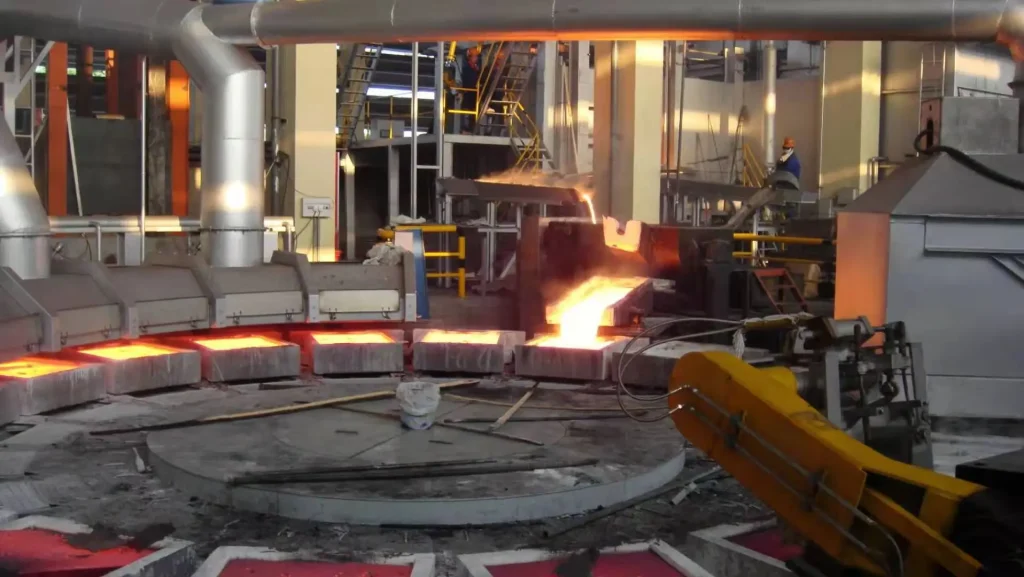
I. Copper Smelting Furnaces:Raw Materials and Basic Analysis
- Copper concentrates mainly contain metal-bearing sulfides with high sulfur content.
- The furnace charge composition is complex. Non-ferrous smelting slag mainly consists of CaO–SiO₂–Fe₂O₃ and CaO–SiO₂–Al₂O₃ systems.
- In non-ferrous smelting, the metal yield is only about 10%, while the remaining 90% becomes slag (including fluxes). Therefore, a large amount of slag is generated during smelting.
- Although non-ferrous metal smelting does not reach the high temperatures of steelmaking, the molten metal has high density and good fluidity.
- Due to the complexity of raw materials from different regions, slag composition varies significantly. Smelting process conditions such as time, temperature, furnace type, flux type, and dosage also differ greatly.
- Non-ferrous metal smelting is mostly batch operation, and furnace temperature fluctuates significantly.
II. Corrosion Conditions
Air Flow Conditions
Excessive air flow or increased oxygen concentration will raise furnace temperature. High temperature accelerates reactions between refractory bricks and slag, metal, and gas, leading to more severe refractory damage.
Mechanical effects
(1) The impacts and vibrations generated during the cleaning of the tuyeres, furnace openings, and the tapping zone.
(2) The molten flow becomes faster during blowing, and the resulting agitation and kinetic energy cause erosion of the refractory lining.
Thermal stress
(1) Thermal gradients generate thermal stress.
(2) Phase transformations cause expansion and contraction stress, leading to cracks and spalling.
Chemical corrosion
1.First type: slag and metal attack
(1) Contact and penetration
(2) Chemical reaction and damage
(3) Structural spalling
2. Second type: gas corrosion
Gas erosion mainly refers to the migration of gases under SO₂ operating conditions, which react with the alkaline bricks in an oxidizing atmosphere.
Main reaction equations
slag formation:
2FeS + 3O₂ = 2FeO + 2SO₂
Cu₂S + 2O₂ = 2CuO + SO₂
2PbS + 3O₂ = 2PbO + 2SO₂
2ZnS + 3O₂ = 2ZnO + 2SO₂
copper output:
4CuO + 2Cu₂S = 8Cu + 2SO₂
Cu₂S + O₂ = 2Cu + SO₂
Note: The smelting process involves not only Fe, Pb, and Zn, but also impurities such as Ni, As, Sn, Bi, and Al. For complex raw materials, specific additives may be required to promote heating, controlled cooling, or extend smelting time to facilitate downstream processing.
III. Application Differences of Magnesia-Chrome Brick and Alumina-Chrome Brick
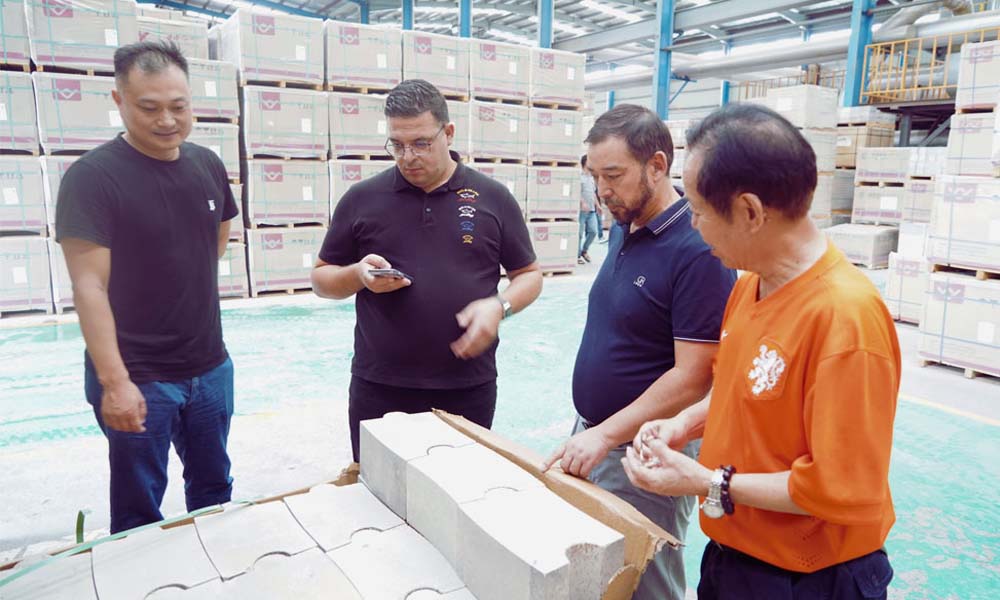
Copper smelting slag mainly consists of CaO–SiO₂–Fe₂O₃ and CaO–SiO₂–Al₂O₃ systems, with the former being dominant and slightly basic to neutral in nature. Therefore, magnesia-chrome bricks are widely used. Common types include directly bonded magnesia-chrome bricks, semi-rebonded magnesia-chrome bricks, and fused rebonded magnesia-chrome bricks.The three bonding types of magnesia chrome bricks are discussed in detail in another article. You can click the link to learn more information.
Performance comparison of the three types:
- Porosity, thermal shock resistance: Directly bonded > Semi-bonded > Fused rebonded
- Bulk density, high-temperature strength, slag resistance: Directly bonded < Semi-bonded < Fused rebonded
Alumina chrome brick
Alumina chrome brick is a neutral refractory with low porosity. However, its thermal shock resistance is inferior to magnesia chrome brick. If the slag exhibits a neutral or slightly acidic atmosphere, it is preferable to choose alumina-chrome bricks. These bricks are composed of alumina-silica materials combined with chromium-containing materials, sintered together to form an alumina-chrome eutectic brick. Their application range is narrower than that of magnesia-chrome bricks, so careful consideration is required when selecting them
IV. Material Selection Principles for Copper Smelting Furnaces (Normal Conditions)
- Slag line area: choose materials with strong slag resistance, high-temperature performance, and low porosity.
- Molten pool: choose materials with good spalling resistance and high strength.
- Furnace top: select products with low porosity, good flexibility, low creep rate, and high thermal shock resistance.
V. Factors Affecting Service Life
- Product quality and material selection
(1) Product quality: failure to meet specifications or presence of defects (omitted details)
(2) Material selection: each furnace zone must use appropriate materials to avoid performance mismatch - Improper operation
(1) Overloading to increase production, leading to higher temperature and faster wear
(2) Incorrect burner angle causing local overheating and corrosion
(3) Spalling caused by hammering or shutdown operations
(4) Excessive buildup without proper insulation
(5) Mechanical damage during slag removal - Improper heating and cooling curves during kiln operation
- Incorrect installation or construction methods
- Improper brick type selection
Magnesia-chrome bricks are widely used in copper smelting furnaces because of their resistance to slag corrosion and thermal cycling. JHYRef provides refractory solutions for non-ferrous metallurgical furnaces, including material selection for different furnace types and operating conditions.